
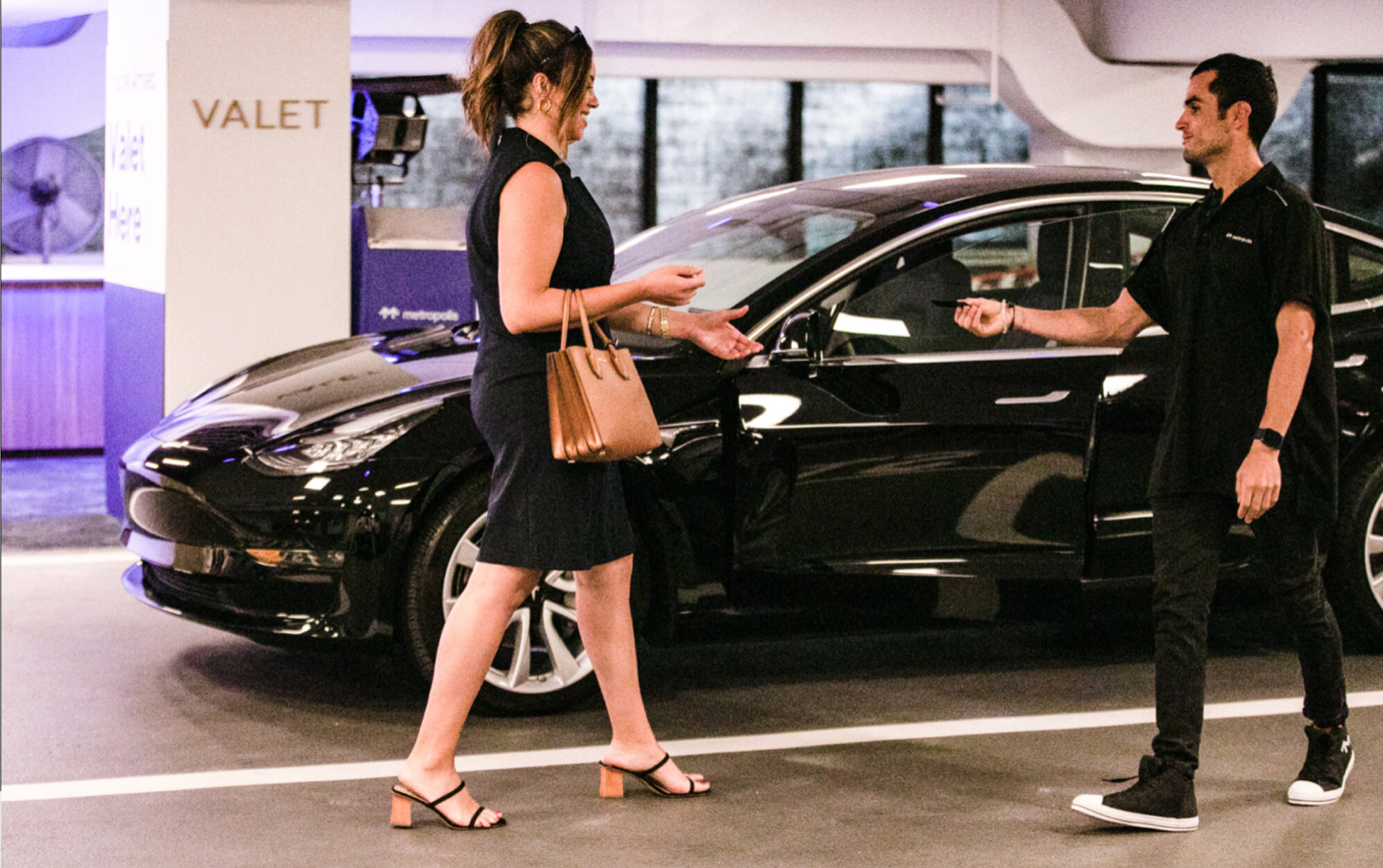
Metropolis Valet
The goal

In order to scale and replace a legacy valet product, design the Metropolis Valet check in flow for high-volume sites. The result: a process that is 58% faster, more seamless for drivers, and more efficient for operators.
My role
Design lead
Duration
3 months
Team
3 PMs
3 BE
2 iOS engineers
Context

The Metropolis valet product
The business need:
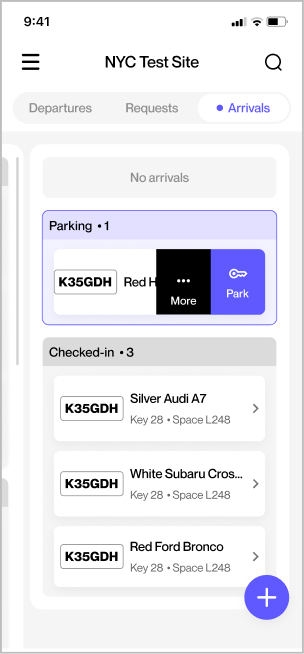
In order deploy the Valet product to new locations, Metropolis needed to deprecate Sphere Valet, a legacy hospitality-focused product being used at the time, at 95 locations (at least 50% considered high-throughput), and enable faster processes.
How the Metropolis Valet product works
Driver enters
Check in driver
Park
Driver request
Retrieve
Driver exits
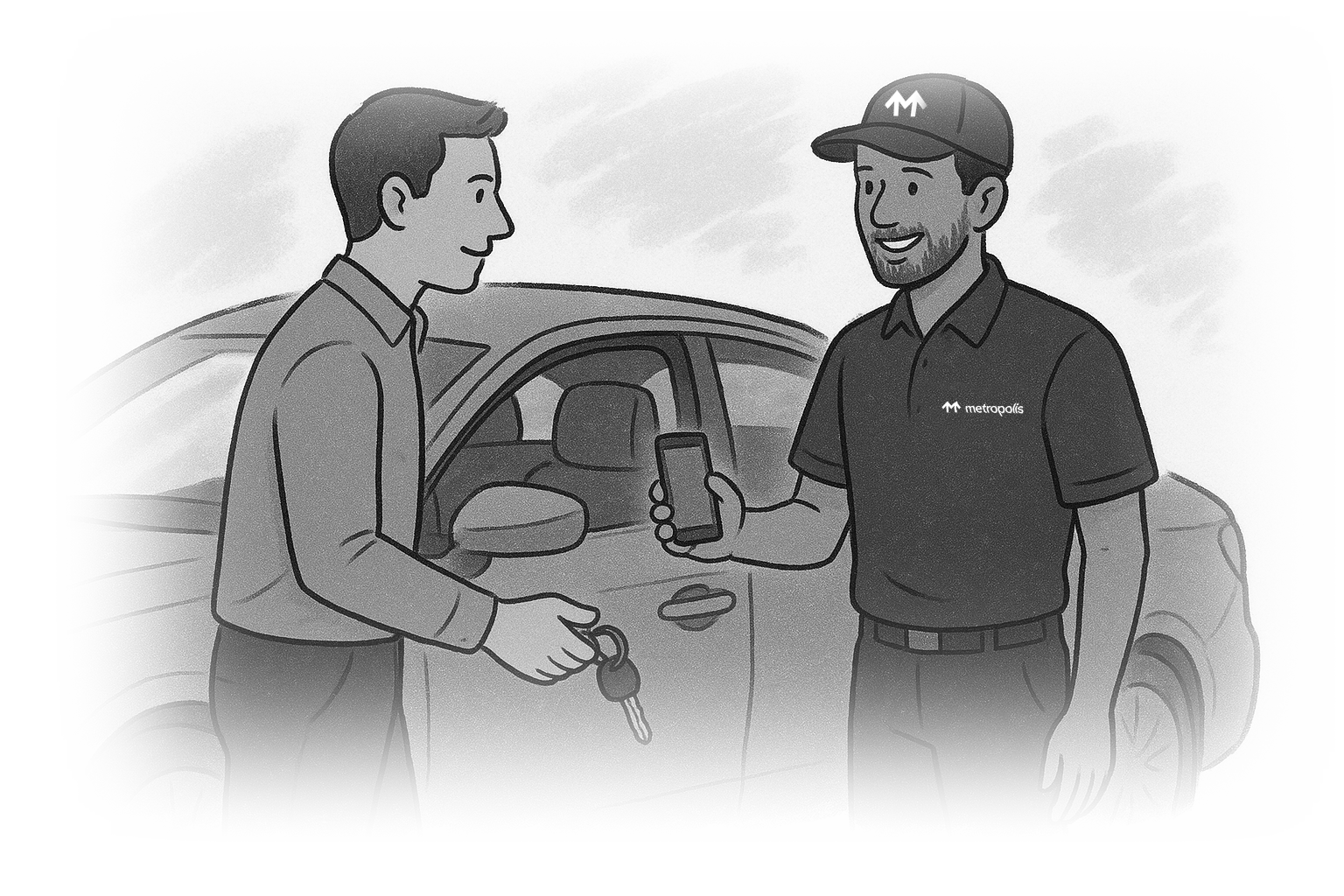
The design need:
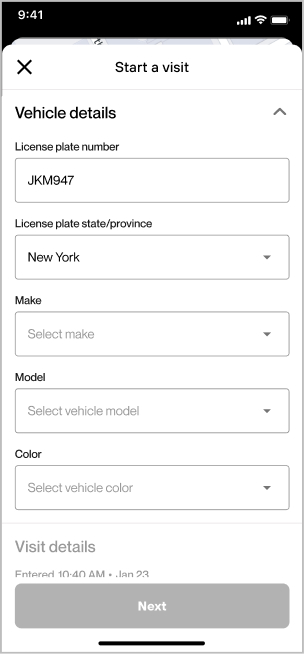
Checking in a driver is the most critical moment in the entire valet experience. The operator must capture the driver’s phone number in order to send a text to them. The flow becomes increasingly more difficult at high-throughput locations such as event, hotels, and locations with limited driveway space.
The design opportunity:
Determining what information should be captured, when, and by whom in the check in process so that the process is seamless for drivers while enabling valet operator efficiency.
Check in – before
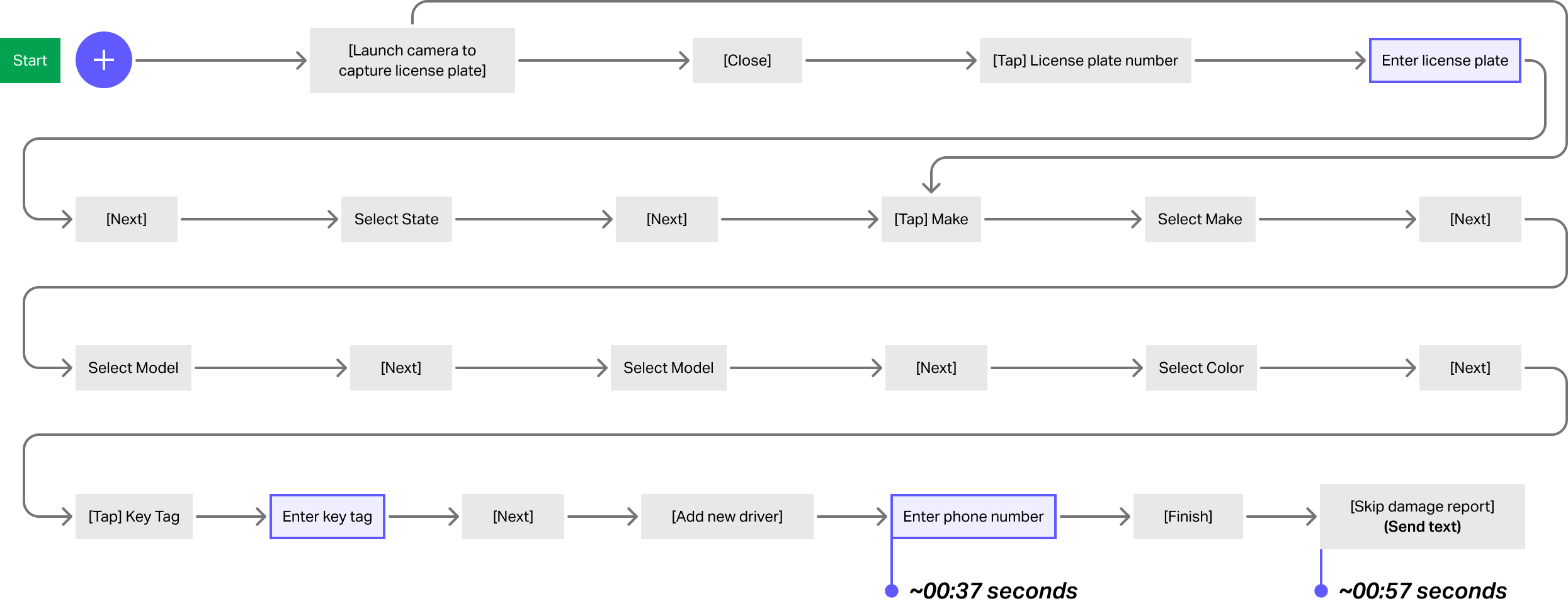
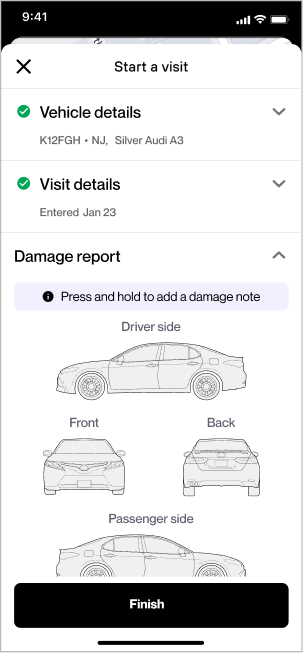
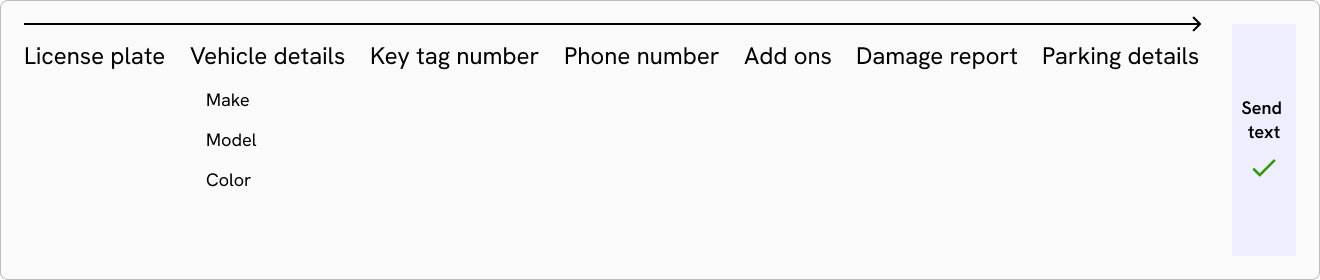
The check in process must be completed in this order to send the driver a text message with a link to their visit.
It takes the valet operator 17-23 taps and just under one minute to send the text message to the driver.
This current flow prioritized vehicle information over driver information, slowing down the check in time.
Research – key insights and recommendations
In order to gain more context and understand current state valet operator experience, I conducted live and async research. I visited 6 NYC valet sites, spoke to and shadowed 12 valet operators – all in one week.
Insight 1
Operators are forced into manual workarounds because rigid workflows and site constraints made the “digital-first” product inefficient in practice.
Insight 2
Many valet sites have unique layouts and constraints, leading staff to prioritize different information during check in.
Insight 3
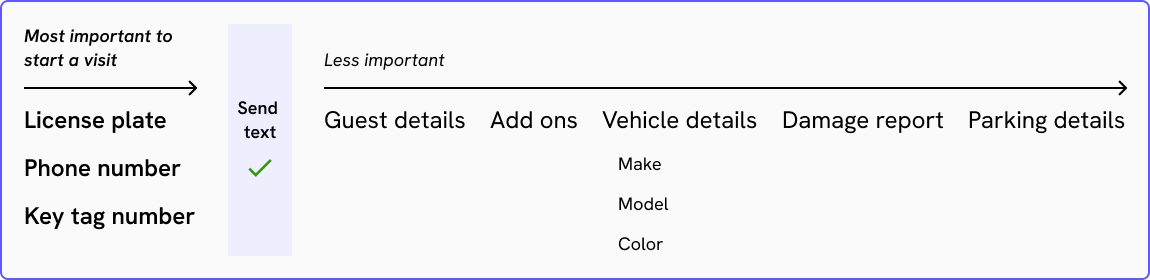
Capture the essential data upfront to speed up check in for both drivers and operators. This approach streamlines the experience across all valet locations.
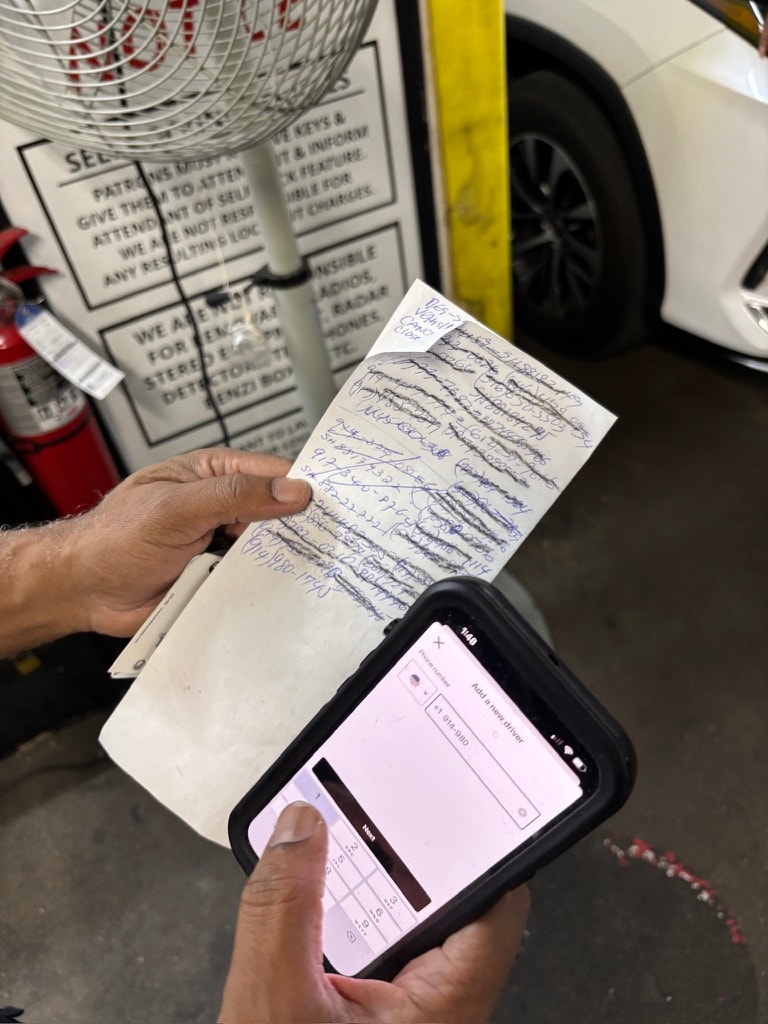
An operator writes the driver’s phone number down and then enters in the app to not keep driver waiting.
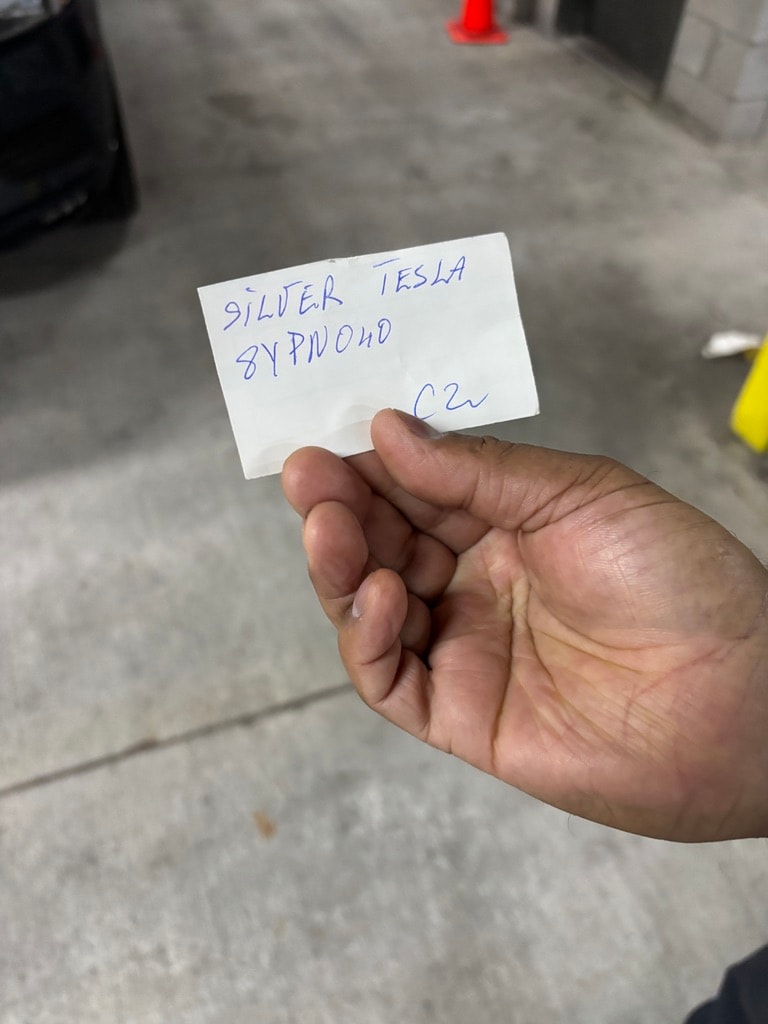
Because of subterranean garage, cell service is poor. Operator hands notes to other operator retrieving vehicles.
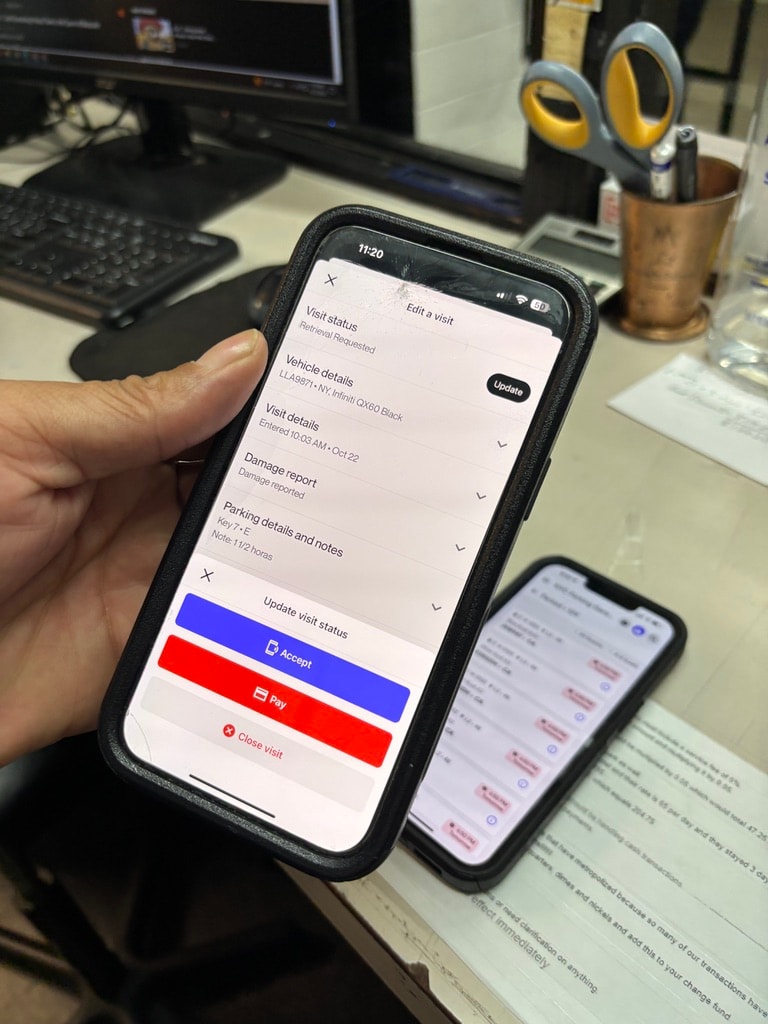

Knowing when the driver needs their vehicle again is key to maximizing space and running an efficient operation. Operators will capture this in the parking notes (accessed after the customer left) or on paper.
Check in data to prioritize
Now, with a formalized high-throughput valet PRD that added context and user stories from my research and recommendations, concept design began.
With these research insights, the goal was to design and test different flows of an expedited check in process in order to create an MVP.
Before
Prioritized data for expedited check in
Testing concepts
❌ Concept 1

✅ Concept 2
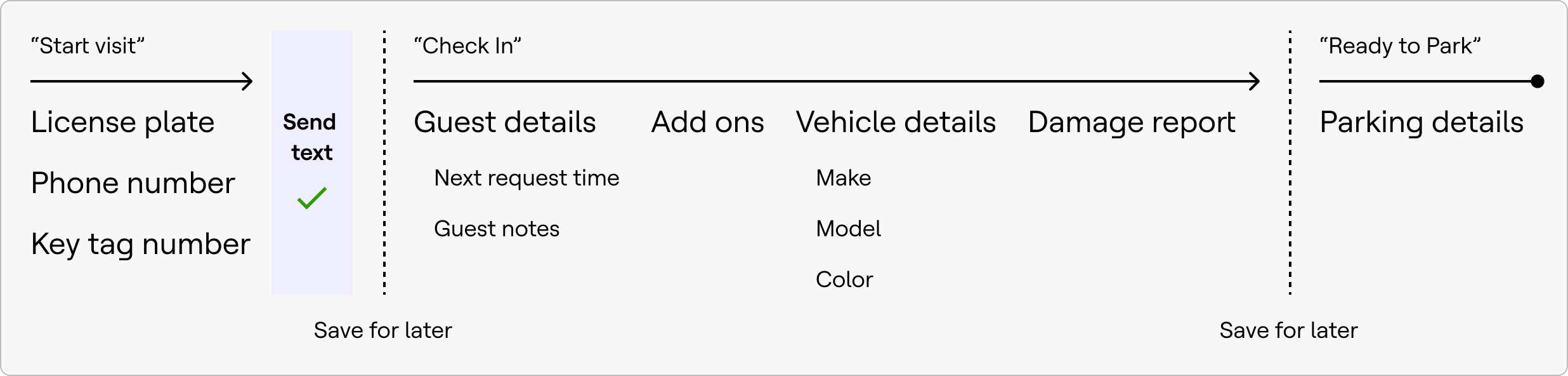
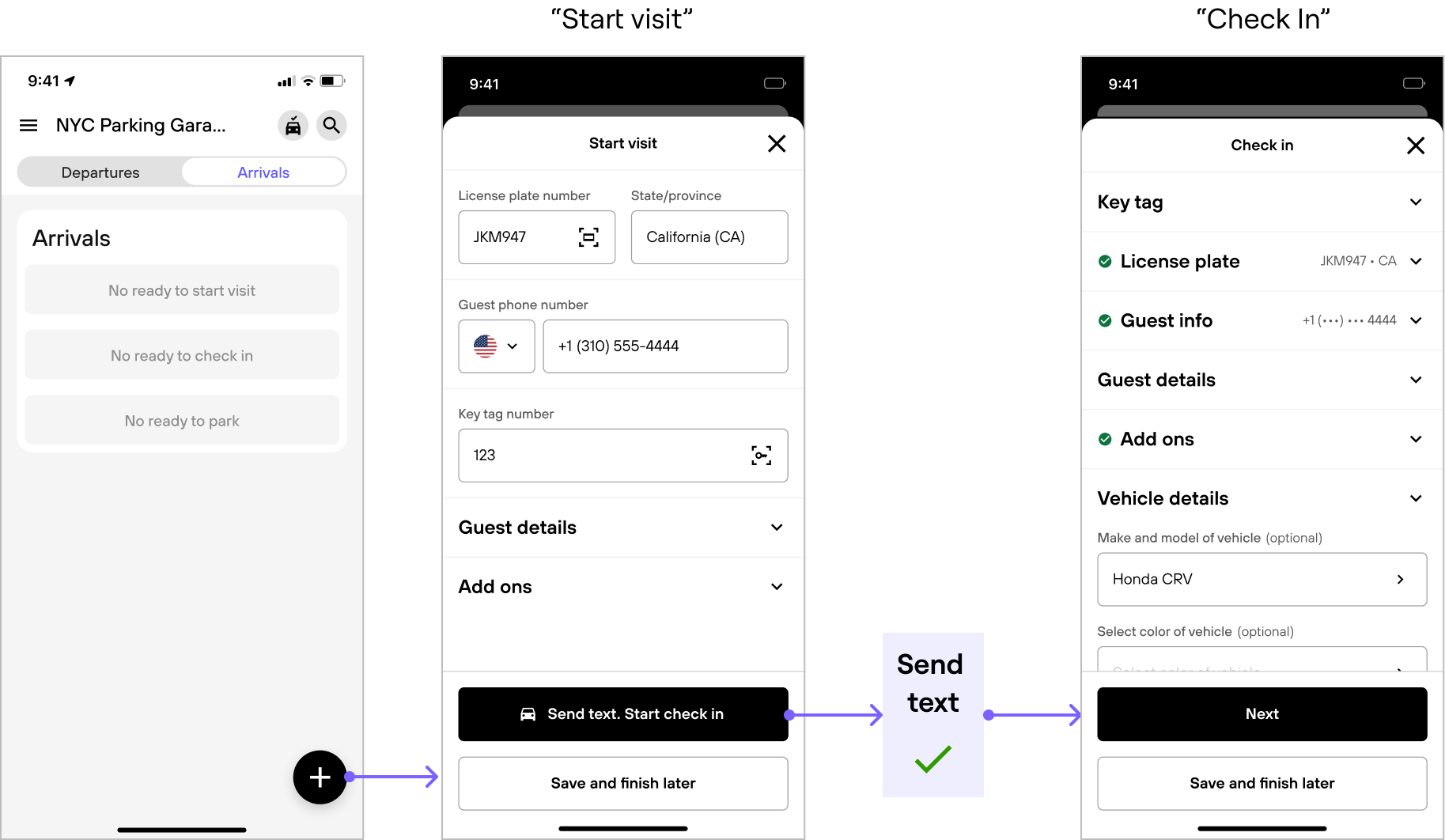
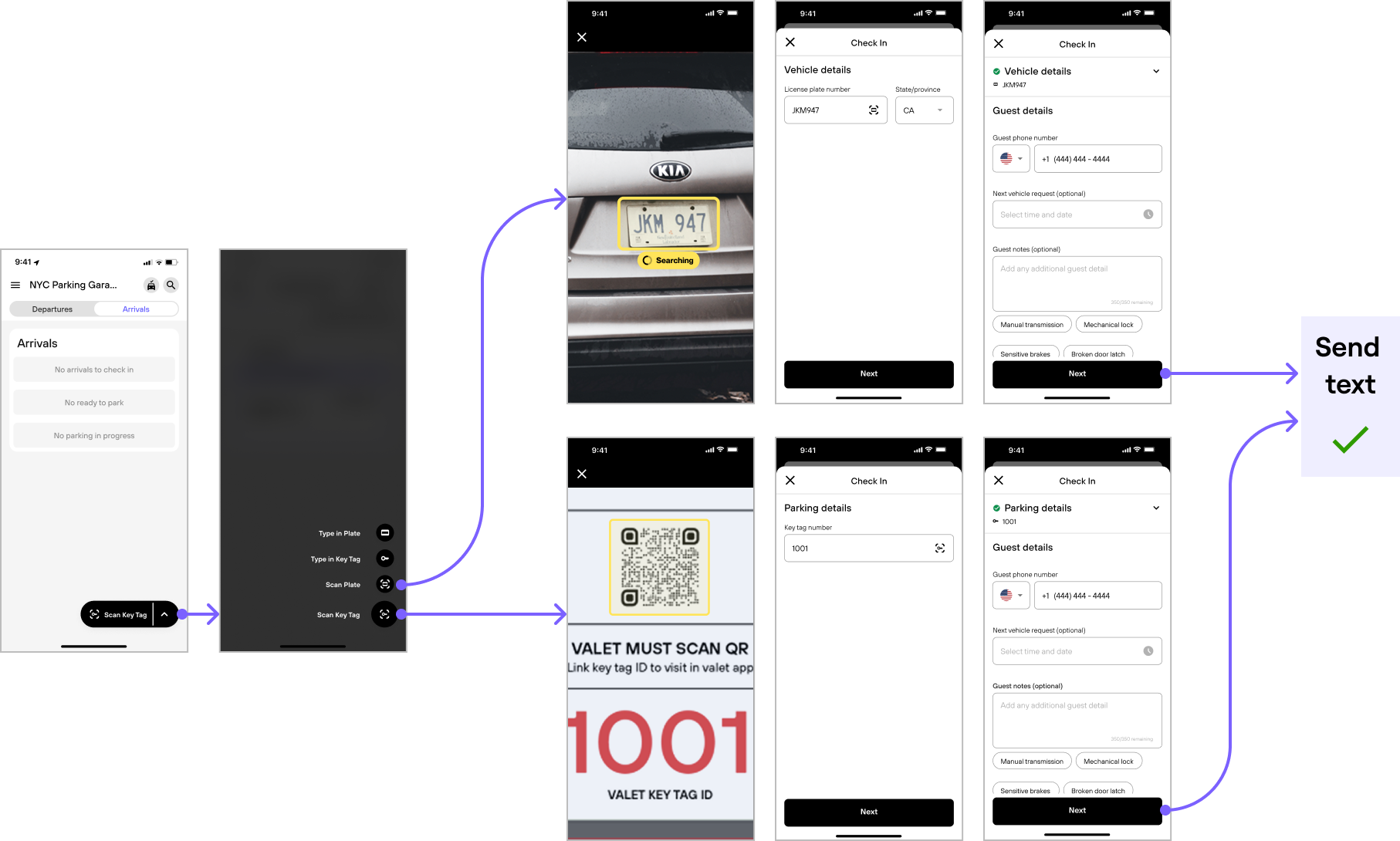
While operators I tested with found the segmented intake process in concept 2 valuable, the “save for later” paths introduced significant engineering complexity. This would have required reworking visit state logic and dashboard progress tracking – well beyond the project scope and MVP timeline.
To stay on track, we simplified the flow to focus on one streamlined check in path, keeping all required fields upfront to send the text message. This refinement balanced valet operator needs with engineering constraints, ensuring we shipped a faster, more reliable experience without overcomplicating the system.
The result
Original
- 58 sec to send text message
- 17-23 touch points
Launched solution
- 24 sec to send text message
- 6 touch points
After putting the high-throughput flow behind a feature flag at pilot locations, all remaining locations with legacy tech were converted to this Valet product, resulting in...
~58%
Faster check in time
$61M
annual total gross payment volume
60,000+
new members acquired monthly
Other improvements
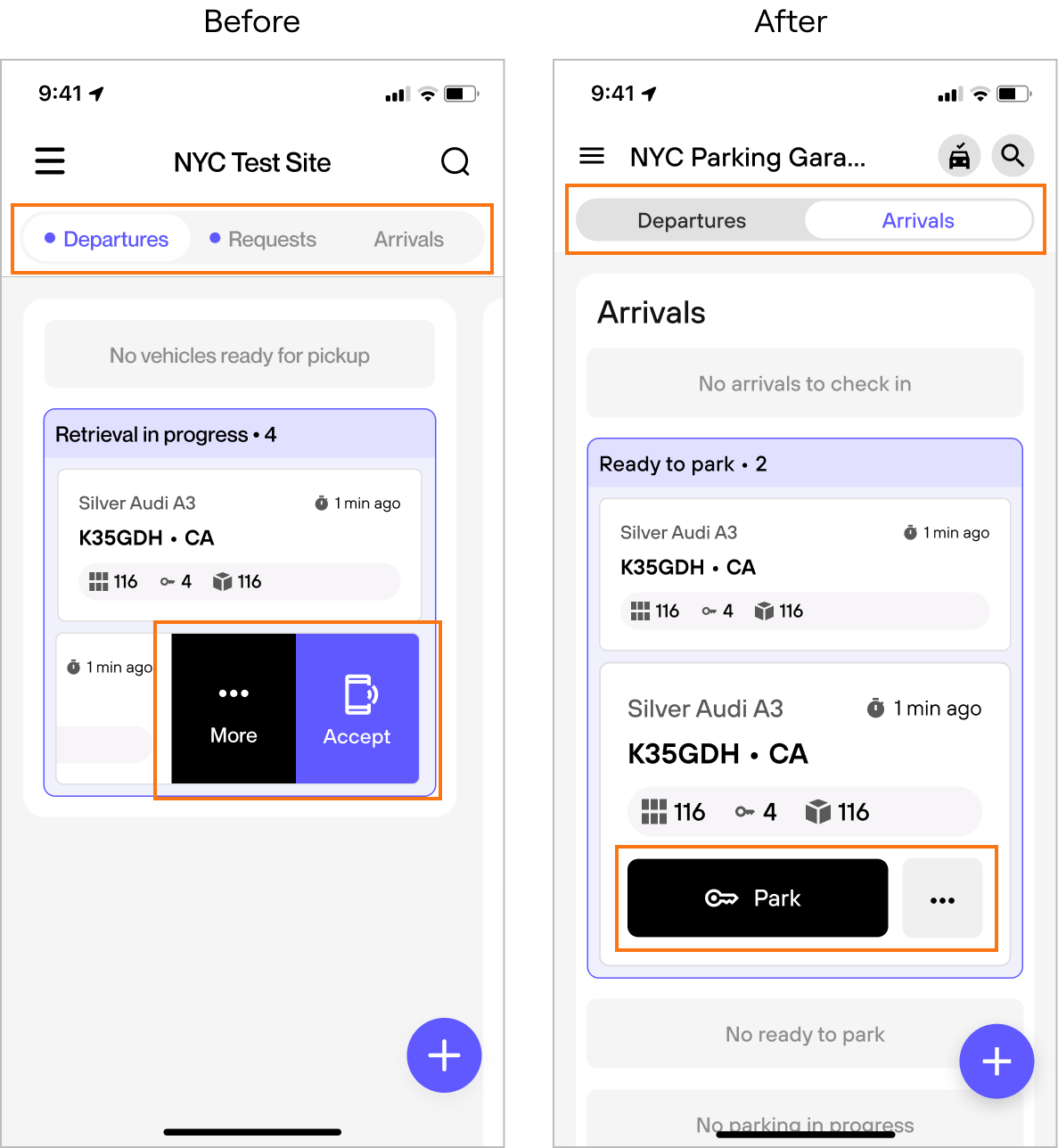
Improved information architecture
- Simplifying dashboard navigation for less cross-referencing
- Tap actions instead of swipe (a nuisance to operators I spoke to)
More valuable visit information
- A direct insight from my research was the operator’s desire to know guest details like how long they expect to park and any notes.

Faster interactions
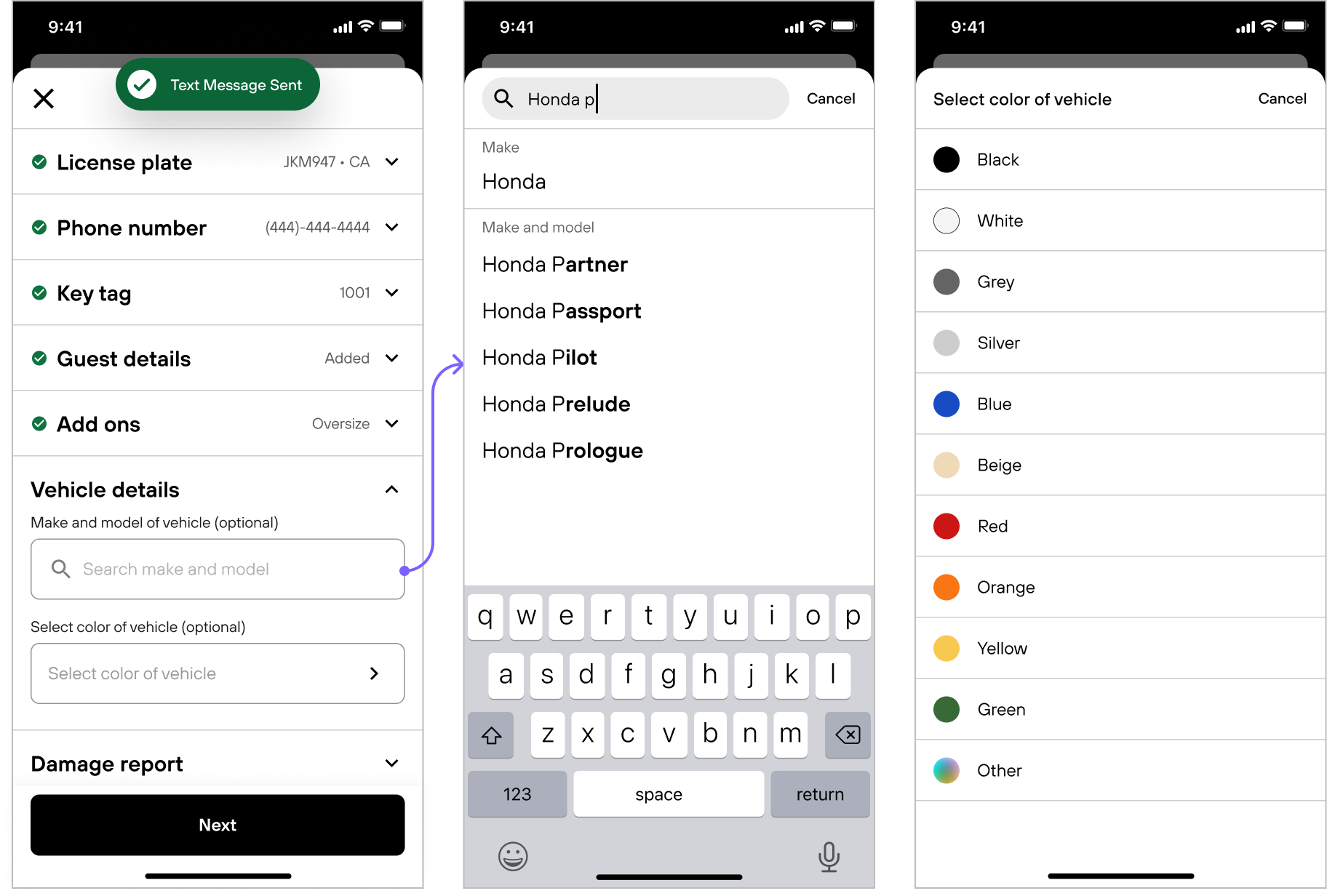
- Simplified vehicle details with a search field and full-sheet view. Before it was all scroll sheels.
Post-launch feedback
Feedback from operators and facility managers:
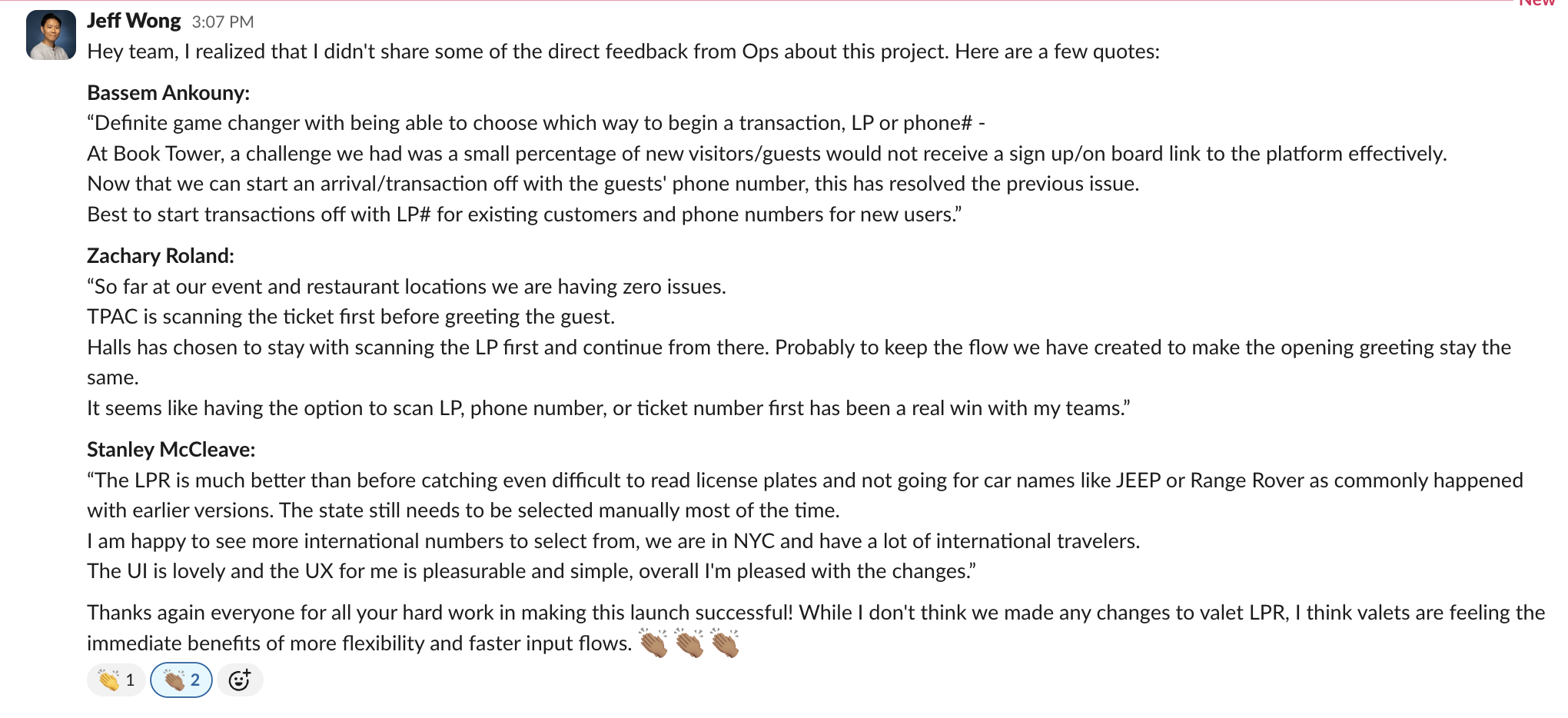
“The UI is lovely and the UX for me is pleasurable and simple, overall I’m pleased with the changes.”
“A challenge we had was a small percentage of new visitors would not receive a sign up link to the platform effectively. Now that we can start an arrival off with the guest’s phone number, this has resolved the previous issue.”
Post-MVP improvements
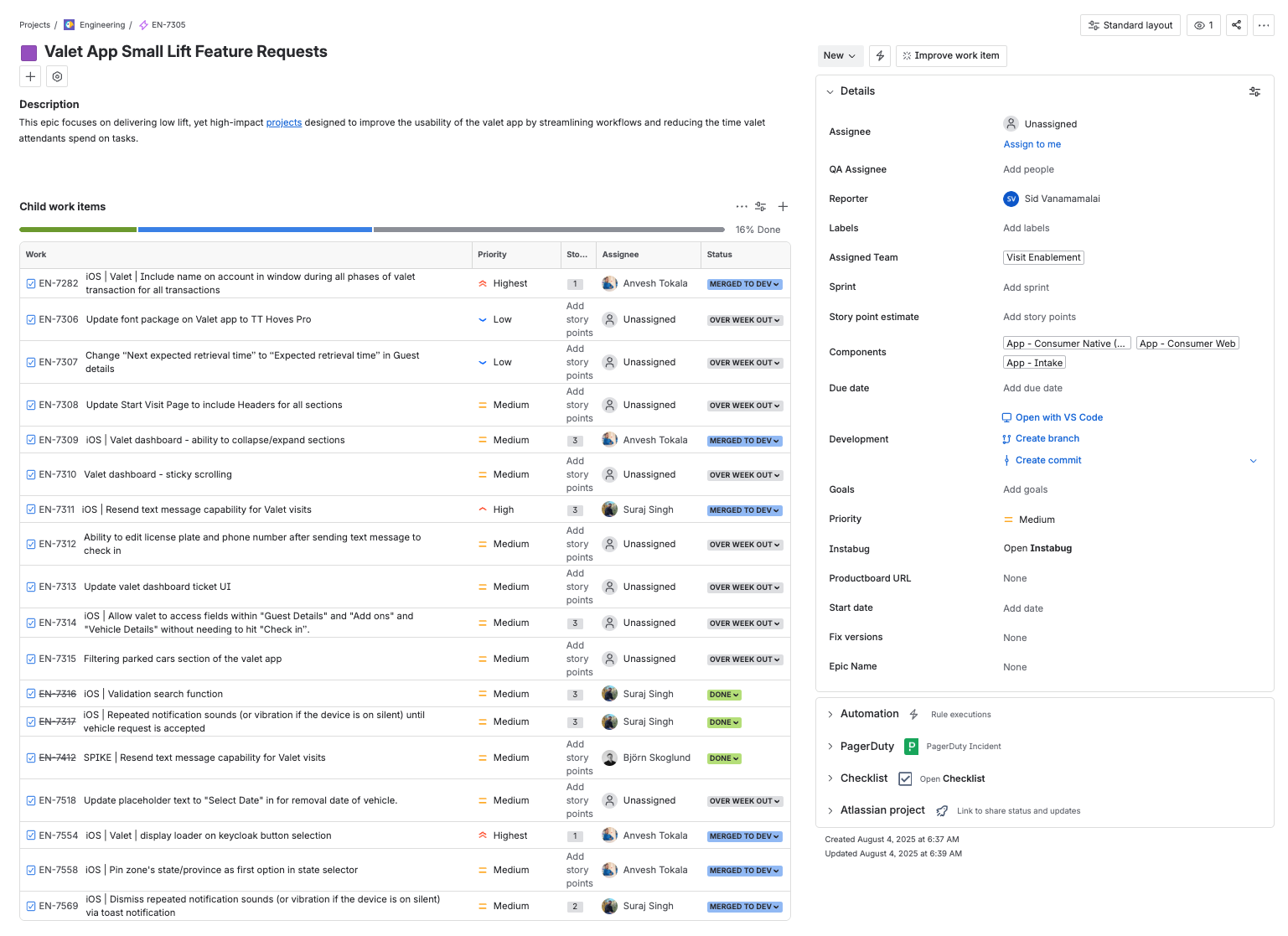
Several design ideas and enhancements were identified during the project but were deprioritized due to scope, complexity, or timeline. I partnered with Product Ops and the PM to prioritize these efforts and create an epic. These represent a mixture of our new design system implementation into the Valet app and other ways to further improve operator efficiency and the overall experience.

Metropolis Valet
The goal
In order to scale and replace a legacy valet product, design the Metropolis Valet check in flow for high-volume sites. The result: a process that is 58% faster, more seamless for drivers, and more efficient for operators.
My role
Design lead
Duration
3 months
Team
3 PMs
3 BE
2 iOS engineers
Context

The Metropolis valet product
The business need:
In order deploy the Valet product to new locations, Metropolis needed to deprecate Sphere Valet, a legacy hospitality-focused product being used at the time, at 95 locations (at least 50% considered high-throughput), and enable faster processes.
How the Metropolis Valet product works
Driver enters
Check in driver
Park
Driver request
Retrieve
Driver exits
The design need:
Checking in a driver is the most critical moment in the entire valet experience. The operator must capture the driver’s phone number in order to send a text to them. The flow becomes increasingly more difficult at high-throughput locations such as event, hotels, and locations with limited driveway space.
The design opportunity:
Determining what information should be captured, when, and by whom in the check in process so that the process is seamless for drivers while enabling valet operator efficiency.
Check in – before
The check in process must be completed in this order to send the driver a text message with a link to their visit.
It takes the valet operator 17-23 taps and just under one minute to send the text message to the driver.
This current flow prioritized vehicle information over driver information, slowing down the check in time.
Research – key insights and recommendations
In order to gain more context and understand current state valet operator experience, I conducted live and async research. I visited 6 NYC valet sites, spoke to and shadowed 12 valet operators – all in one week.
Insight 1
Operators are forced into manual workarounds because rigid workflows and site constraints made the “digital-first” product inefficient in practice.
Insight 2
Many valet sites have unique layouts and constraints, leading staff to prioritize different information during check in.
Insight 3
Capture the essential data upfront to speed up check in for both drivers and operators. This approach streamlines the experience across all valet locations.
An operator writes the driver’s phone number down and then enters in the app to not keep driver waiting.
Because of subterranean garage, cell service is poor. Operator hands notes to other operator retrieving vehicles.
Knowing when the driver needs their vehicle again is key to maximizing space and running an efficient operation. Operators will capture this in the parking notes (accessed after the customer left) or on paper.
Check in data to prioritize
Now, with a formalized high-throughput valet PRD that added context and user stories from my research and recommendations, concept design began.
With these research insights, the goal was to design and test different flows of an expedited check in process in order to create an MVP.
Before
Prioritized data for expedited check in
Testing concepts
❌ Concept 1
✅ Concept 2
While operators I tested with found the segmented intake process in concept 2 valuable, the “save for later” paths introduced significant engineering complexity. This would have required reworking visit state logic and dashboard progress tracking – well beyond the project scope and MVP timeline.
To stay on track, we simplified the flow to focus on one streamlined check in path, keeping all required fields upfront to send the text message. This refinement balanced valet operator needs with engineering constraints, ensuring we shipped a faster, more reliable experience without overcomplicating the system.
The result
Original
- 58 sec to send text message
- 17-23 touch points
Launched solution
- 24 sec to send text message
- 6 touch points
After putting the high-throughput flow behind a feature flag at pilot locations, all remaining locations with legacy tech were converted to this Valet product, resulting in...
~58%
Faster check in time
$61M
annual total gross payment volume
60,000+
new members acquired monthly
Other improvements
Improved information architecture
- Simplifying dashboard navigation for less cross-referencing
- Tap actions instead of swipe (a nuisance to operators I spoke to)
More valuable visit information
- A direct insight from my research was the operator’s desire to know guest details like how long they expect to park and any notes.
Faster interactions
- Simplified vehicle details with a search field and full-sheet view. Before it was all scroll sheels.
Post-launch feedback
Feedback from operators and facility managers:
“The UI is lovely and the UX for me is pleasurable and simple, overall I’m pleased with the changes.”
“A challenge we had was a small percentage of new visitors would not receive a sign up link to the platform effectively. Now that we can start an arrival off with the guest’s phone number, this has resolved the previous issue.”
Post-MVP improvements
Several design ideas and enhancements were identified during the project but were deprioritized due to scope, complexity, or timeline. I partnered with Product Ops and the PM to prioritize these efforts and create an epic. These represent a mixture of our new design system implementation into the Valet app and other ways to further improve operator efficiency and the overall experience.

Metropolis Valet
The goal
In order to scale and replace a legacy valet product, design the Metropolis Valet check in flow for high-volume sites. The result: a process that is 58% faster, more seamless for drivers, and more efficient for operators.
My role
Design lead
Duration
3 months
Team
3 PMs
3 BE
2 iOS engineers
Context

The Metropolis valet product
The business need:
In order deploy the Valet product to new locations, Metropolis needed to deprecate Sphere Valet, a legacy hospitality-focused product being used at the time, at 95 locations (at least 50% considered high-throughput), and enable faster processes.
How the Metropolis Valet product works
Driver enters
Check in driver
Park
Driver request
Retrieve
Driver exits
The design need:
Checking in a driver is the most critical moment in the entire valet experience. The operator must capture the driver’s phone number in order to send a text to them. The flow becomes increasingly more difficult at high-throughput locations such as event, hotels, and locations with limited driveway space.
The design opportunity:
Determining what information should be captured, when, and by whom in the check in process so that the process is seamless for drivers while enabling valet operator efficiency.
Check in – before
The check in process must be completed in this order to send the driver a text message with a link to their visit.
It takes the valet operator 17-23 taps and just under one minute to send the text message to the driver.
This current flow prioritized vehicle information over driver information, slowing down the check in time.
Research – key insights and recommendations
An operator writes the driver’s phone number down and then enters in the app to not keep driver waiting.
Because of subterranean garage, cell service is poor. Operator hands notes to other operator retrieving vehicles.
Knowing when the driver needs their vehicle again is key to maximizing space and running an efficient operation. Operators will capture this in the parking notes (accessed after the customer left) or on paper.
In order to gain more context and understand current state valet operator experience, I conducted live and async research. I visited 6 NYC valet sites, spoke to and shadowed 12 valet operators – all in one week.
Insight 1
Operators are forced into manual workarounds because rigid workflows and site constraints made the “digital-first” product inefficient in practice.
Insight 2
Many valet sites have unique layouts and constraints, leading staff to prioritize different information during check in.
Insight 3
Capture the essential data upfront to speed up check in for both drivers and operators. This approach streamlines the experience across all valet locations.
Check in data to prioritize
Now, with a formalized high-throughput valet PRD that added context and user stories from my research and recommendations, concept design began.
With these research insights, the goal was to design and test different flows of an expedited check in process in order to create an MVP.
Before
Prioritized data for expedited check in
Testing concepts
❌ Concept 1
✅ Concept 2
While operators I tested with found the segmented intake process in concept 2 valuable, the “save for later” paths introduced significant engineering complexity. This would have required reworking visit state logic and dashboard progress tracking – well beyond the project scope and MVP timeline.
To stay on track, we simplified the flow to focus on one streamlined check in path, keeping all required fields upfront to send the text message. This refinement balanced valet operator needs with engineering constraints, ensuring we shipped a faster, more reliable experience without overcomplicating the system.
The result
Original
- 58 sec to send text message
- 17-23 touch points
Launched solution
- 24 sec to send text message
- 6 touch points
After putting the high-throughput flow behind a feature flag at pilot locations, all remaining locations with legacy tech were converted to this Valet product, resulting in...
~58%
Faster check in time
$61M
annual total gross payment volume
60,000+
new members acquired monthly
Other improvements
Improved information architecture
- Simplifying dashboard navigation for less cross-referencing
- Tap actions instead of swipe (a nuisance to operators I spoke to)
More valuable visit information
- A direct insight from my research was the operator’s desire to know guest details like how long they expect to park and any notes.
Faster interactions
- Simplified vehicle details with a search field and full-sheet view. Before it was all scroll sheels.
Post-launch feedback
Feedback from operators and facility managers:
“The UI is lovely and the UX for me is pleasurable and simple, overall I’m pleased with the changes.”
“A challenge we had was a small percentage of new visitors would not receive a sign up link to the platform effectively. Now that we can start an arrival off with the guest’s phone number, this has resolved the previous issue.”
Post-MVP improvements
Several design ideas and enhancements were identified during the project but were deprioritized due to scope, complexity, or timeline. I partnered with Product Ops and the PM to prioritize these efforts and create an epic. These represent a mixture of our new design system implementation into the Valet app and other ways to further improve operator efficiency and the overall experience.